Bell's palsy: what upper cervical research has looked at

One side of your face stopped working almost overnight. You're doing what the doctor said, and you're watching the mirror every morning.

Bell's palsy: what we can and can't say →

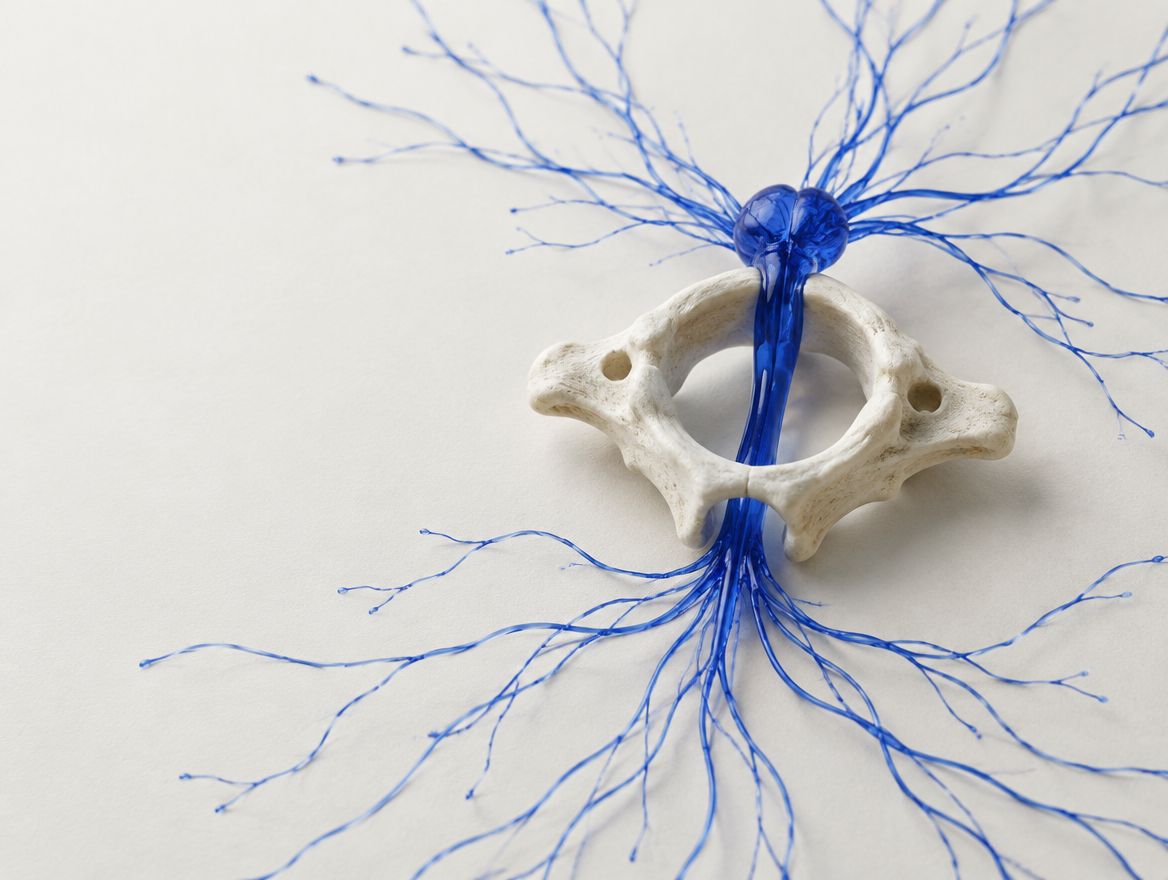
Illustration: the top vertebra of the neck, with fine blue nerve branches spreading out from it

Bell's palsy is frightening, and waiting is hard. The facial nerve leaves the skull close to the top of the neck, and one case report has followed a man with Bell's palsy under NUCCA care. QSM3, the method used at our office, is a progression of NUCCA. The report is described here exactly as far as it goes.

1 study on this page

  • Designs: Case report
  • Published: 2019
  • NUCCA lineage: marked on the NUCCA studies. QSM3, the method used at our office, is a progression of NUCCA.

Where these studies sit, by design and year

1 study, published 2019. Strongest design: case report. 1 in the NUCCA lineage, ringed.

the studies

What each study looked at

Strongest study design first. The dots show the design, from a single case (one dot) to a controlled trial (four). How to read this library

Case report2019NUCCANUCCA lineageNot indexed in PubMed

A 68-year-old man two weeks into Bell's palsy

Who and how many
One man, 68, with two weeks of drooping and paralysis on the left side of his face. He couldn't close his eyelid and had trouble eating, drinking and speaking. Steroids and eye drops had not helped.
What was measured
His facial symptoms over four visits, with NUCCA corrections on visits two to four.
What was found
By the third visit his face was reported as 80 to 90% improved, and after four visits the paralysis had resolved.
Limits
One person, early in the illness. Bell's palsy often improves on its own over weeks to months, and a single case can't separate care from that natural course.

Read the abstract on the journal's site → Source 1

before you draw conclusions

What this research does and doesn't tell you

One person, early in the illness, and Bell's palsy often improves on its own. A case like this can't show that care made the difference. Sudden facial weakness needs a medical evaluation first, the same day, to rule out a stroke.

Published research can't predict what will happen for any one person, including you. Studies report averages and single stories; your nervous system is your own. That is why The Lazar Method™ starts with measurement, not with a promise.

We measure first, so the answer is about you, not an average.

Before any correction we measure how your nervous system is regulating your body: heart rate variability, thermal and muscle tone scans, PostureIQ™, and digital X-ray of the upper neck. QSM3, the method used at our office, is a progression of NUCCA. Dr. Jonathan Lazar, D.C., or someone personally trained by him, will go over your scans and images with you.

If we can help, we'll tell you. If we can't, we'll help you find someone who can.

Talk it through on a 15-minute Clarity Call →

This page is educational and is not medical advice. Keep the doctors who know you in the loop.
citations

Sources

  1. Preece S, Alcantara J. 2019. Resolution of Bell’s Palsy in a 68-Year-Old Man Following Correction of Upper Cervical Subluxation: A Case Report & Review Journal of Upper Cervical Chiropractic Research April 30, 2019:28-35. Not indexed in PubMed. Article page on vertebralsubluxationresearch.com

Titles are quoted exactly as published. Sources checked 2026-11-03.

tried everything

When nothing else has worked, start with clarity.

In about 4 minutes, you'll see whether your symptoms point to nervous system dysfunction, and exactly what to do next. Free. Your answers stay private. No spam, ever.

Prefer to talk first?

or call 734.274.5107 · ready to come in? Book your complimentary consultation

Screening adapted from the autonomic dysfunction screening developed by Bruce Bell, MD.

A member of our team will reach out within one business day.