Migraine: what upper cervical research has looked at

You've tracked the triggers, tried the medications and seen the specialists. The scans came back fine. The migraines still come.

How we approach migraine →

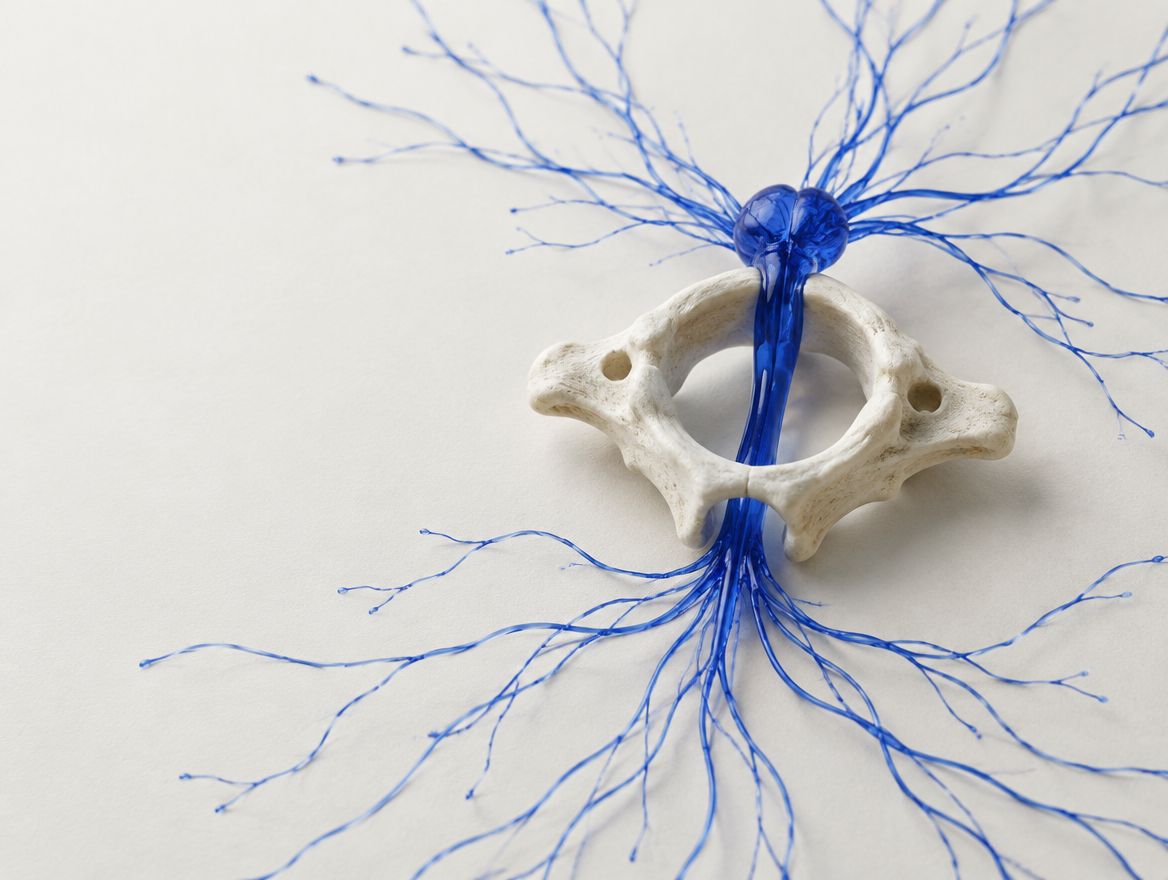
Illustration: the top vertebra of the neck, with fine blue nerve branches spreading out from it

If that's you, you have probably also been told, one way or another, that this is something you'll have to manage. This page gathers the published studies that looked at upper cervical care and migraine, in plain words: who was studied, what was measured, what was found, and where each study falls short.

The most careful of them comes from NUCCA researchers, and it is the place to start.

3 studies on this page

  • Designs: Pilot study, case report
  • Published: 2012 to 2026
  • NUCCA lineage: marked on the NUCCA studies. QSM3, the method used at our office, is a progression of NUCCA.

Where these studies sit, by design and year

3 studies, published 2012 to 2026. Strongest design: cohort, pilot or before-and-after study. 1 in the NUCCA lineage, ringed.

the studies

What each study looked at

Strongest study design first. The dots show the design, from a single case (one dot) to a controlled trial (four). How to read this library

Pilot study2015NUCCANUCCA lineage

Eleven adults with migraine, imaged by MRI before and after NUCCA care

Who and how many
11 adults with migraine diagnosed by a neurologist, each with an atlas misalignment on examination.
What was measured
The main measure was intracranial compliance on MRI, a reading of how well the skull makes room for the flow of blood and spinal fluid, at the start, week 4 and week 8. The study also tracked headache days and migraine-specific quality of life.
What was found
5 of the 11 showed a rise in intracranial compliance, but the average change for the group was not statistically significant. Headache days went down, and migraine-related quality of life and disability improved by a clinically meaningful amount.
Limits
Eleven people and no control group, and the main MRI measure did not change on average. The authors say a controlled study is needed to confirm the findings. The study was registered at ClinicalTrials.gov (NCT01980927).

Read the abstract on PubMed → Source 1

Case report2026Knee Chest upper cervical

A woman who traveled abroad for an intensive week of upper cervical care for migraine

Who and how many
One woman, 46, living in Sri Lanka, with ten years of migraine and a newer daily headache pattern. She had recently spent two nights in hospital for a prolonged migraine attack.
What was measured
Exam and imaging findings, sensitivity to light and sound, and the Bournemouth Questionnaire (37 of 70 at the start), during six days of twice-daily Knee Chest upper cervical care in Singapore and at a four-month follow-up.
What was found
By the end of the week her exam findings had normalized and her sensitivity to light and sound had resolved. At four months she reported about 95% improvement in her headaches and no remaining memory or vision symptoms. No side effects were reported.
Limits
One person and no comparison, and the 95% figure is her own estimate. The authors describe an association in time, not proof of cause.

Read the abstract on PubMed → Source 2

Case report2012Blair upper cervical

A 39-year-old woman with essential tremor and migraine

Who and how many
One woman, 39, with essential tremor diagnosed in 2000 and migraine with aura since age 10, two to three times a week, after many medications.
What was measured
Her tremor and her migraines over four months of Blair upper cervical care.
What was found
Both improved after her first visit, and the improvement held at four months.
Limits
One person and no comparison. The Blair correction in this report was a hand-delivered, high-velocity correction, a different style from the orthogonal approach used at our office.

Read the abstract on PubMed → Source 3

before you draw conclusions

What this research does and doesn't tell you

Three studies, and the largest followed eleven people. This is an early body of research. The NUCCA pilot is the most careful of the three, and its main MRI measure did not change on average, even though headache days and quality of life did. The two case reports each describe one person; they can't show that the care caused the change.

Published research can't predict what will happen for any one person, including you. Studies report averages and single stories; your nervous system is your own. That is why The Lazar Method™ starts with measurement, not with a promise.

We measure first, so the answer is about you, not an average.

Before any correction we measure how your nervous system is regulating your body: heart rate variability, thermal and muscle tone scans, PostureIQ™, and digital X-ray of the upper neck. QSM3, the method used at our office, is a progression of NUCCA. Dr. Jonathan Lazar, D.C., or someone personally trained by him, will go over your scans and images with you.

If we can help, we'll tell you. If we can't, we'll help you find someone who can.

Talk it through on a 15-minute Clarity Call →

This page is educational and is not medical advice. Keep the doctors who know you in the loop.

citations

Sources

  1. Woodfield HC, Hasick DG, Becker WJ, Rose MS, Scott JN. 2015. Effect of Atlas Vertebrae Realignment in Subjects with Migraine: An Observational Pilot Study. Biomed Res Int 2015:630472. PubMed 26783523 · DOI 10.1155/2015/630472 · free full text
  2. Wong J, Rai S. 2026. Intensive Knee Chest Upper Cervical Chiropractic Care in a Traveling Patient With Migraine: A Case Report. Cureus 18(10):e117366. PubMed 42974568 · DOI 10.7759/cureus.117366 · free full text
  3. Hubbard TA, Kane JD. 2012. Chiropractic management of essential tremor and migraine: a case report. J Chiropr Med 11(2):121-6. PubMed 23204956 · DOI 10.1016/j.jcm.2011.10.006 · free full text

Titles are quoted exactly as published. Sources checked 2026-11-03.

tried everything

When nothing else has worked, start with clarity.

In about 4 minutes, you'll see whether your symptoms point to nervous system dysfunction, and exactly what to do next. Free. Your answers stay private. No spam, ever.

Prefer to talk first?

or call 734.274.5107 · ready to come in? Book your complimentary consultation

Screening adapted from the autonomic dysfunction screening developed by Bruce Bell, MD.

A member of our team will reach out within one business day.