Headaches that start in the neck: what has been studied

The headache sits at the base of your skull or behind your eyes. It's worse when you turn your head. Nobody has connected it to your neck.

How we approach headaches from the neck →

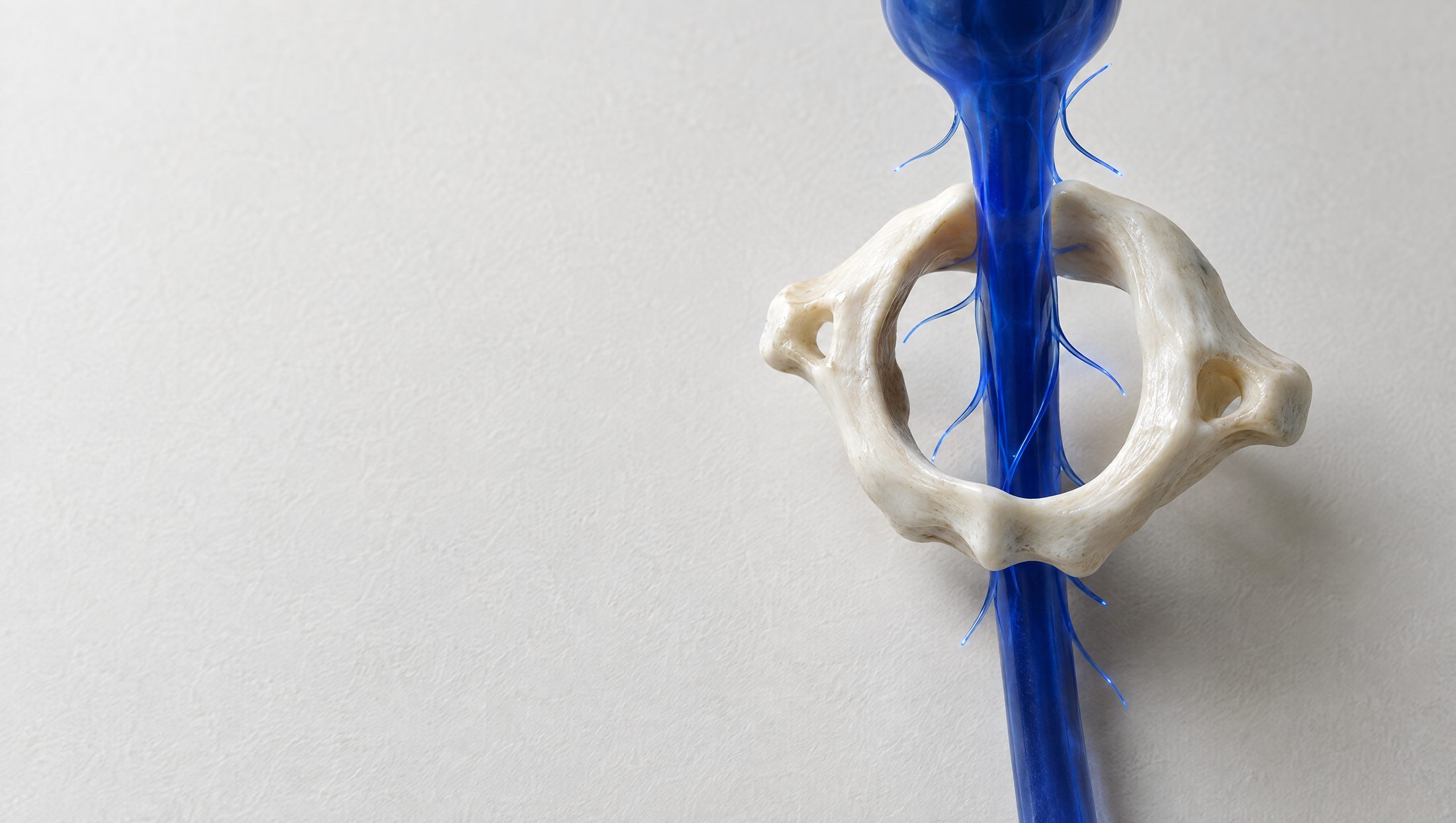
Illustration: the atlas, the top vertebra of the neck, with a blue nerve passing through it

Headaches like this are often called cervicogenic, meaning they start in the neck. People tell us they have had the neck looked at and the head looked at, but never the place where the two meet. This page gathers the published upper cervical studies that measured headaches of this kind, or headache alongside neck pain.

3 studies on this page

  • Designs: Randomized controlled trial, prospective cohort study, case report
  • Published: 2001 to 2026

Where these studies sit, by design and year

3 studies, published 2001 to 2026. Strongest design: controlled trial.

the studies

What each study looked at

Strongest study design first. The dots show the design, from a single case (one dot) to a controlled trial (four). How to read this library

Randomized controlled trial2001Toggle recoil

Neck motion in 105 people with headaches that start in the neck, compared with a sham

Who and how many
105 people with cervicogenic headache, a headache that starts in the neck, at a university chiropractic research clinic in Melbourne.
What was measured
Active neck range of motion, measured with a head goniometer by two examiners who did not know who had received what. Groups received toggle recoil, a technique long used in upper cervical work, or a sham, in a double-blind crossover design.
What was found
Neck range of motion increased significantly after the real procedure, and the difference between the groups went away once the second group had received it too.
Limits
The trial reported neck motion, not headache frequency, so this paper doesn't say what happened to the headaches.

Read the abstract on PubMed → Source 1

Prospective cohort study2011Several upper cervical techniques

1,090 new patients at 83 upper cervical offices: early changes and reactions

Who and how many
1,090 consecutive new patients at the offices of 83 upper cervical chiropractors.
What was measured
Neck disability, low back disability (Oswestry), 0 to 10 pain ratings for the neck, headache, mid back and low back, satisfaction, and any new or worse symptom within 24 hours of a visit. Measured at the start and after about two weeks: an average of 4.5 visits and 2.4 corrections over 17 days.
What was found
Neck pain and disability, headache, mid-back pain, and low back pain and disability all improved significantly, with an average satisfaction of 9.1 out of 10. About 31% of patients had a short-lived reaction (a new or worse symptom within 24 hours), and 5.1% rated it intense. No serious adverse events were reported.
Limits
No control group and about two weeks of follow-up. The authors say randomized studies are needed before risks and benefits can be weighed definitively.

Read the abstract on PubMed → Source 2

Case report2026Blair upper cervical

Neck pain and headaches after a car accident that injured an artery in the neck

Who and how many
One man, 54, eight months after a car accident that caused a partial tear (dissection) of his left internal carotid artery. He had severe neck pain, headaches and painful, restricted neck motion.
What was measured
Exam findings, a 0 to 10 pain rating, the Neck Disability Index and the RAND-36 quality-of-life survey over six months, during which he had 5 Blair upper cervical corrections. Exam and imaging were used first to judge whether care was reasonable.
What was found
All three questionnaires showed improvement in his presenting symptoms.
Limits
One person. The authors say more study is needed on both effectiveness and safety for people with a history of artery injury. The journal published two letters to the editor in response, one of them on the report's methods.

Read the abstract on PubMed → Source 3

before you draw conclusions

What this research does and doesn't tell you

The trial here is double-blind and sham-controlled, but it measured neck motion, not how often the headaches came. The large cohort measured headache directly but had no comparison group and followed people for about two weeks. Together they say this question has been looked at, not that it is settled.

Published research can't predict what will happen for any one person, including you. Studies report averages and single stories; your nervous system is your own. That is why The Lazar Method™ starts with measurement, not with a promise.

We measure first, so the answer is about you, not an average.

Before any correction we measure how your nervous system is regulating your body: heart rate variability, thermal and muscle tone scans, PostureIQ™, and digital X-ray of the upper neck. QSM3, the method used at our office, is a progression of NUCCA. Dr. Jonathan Lazar, D.C., or someone personally trained by him, will go over your scans and images with you.

If we can help, we'll tell you. If we can't, we'll help you find someone who can.

Talk it through on a 15-minute Clarity Call →

This page is educational and is not medical advice. Keep the doctors who know you in the loop.

citations

Sources

  1. Whittingham W, Nilsson N. 2001. Active range of motion in the cervical spine increases after spinal manipulation (toggle recoil). J Manipulative Physiol Ther 24(9):552-5. PubMed 11753327 · DOI 10.1067/mmt.2001.118979
  2. Eriksen K, Rochester RP, Hurwitz EL. 2011. Symptomatic reactions, clinical outcomes and patient satisfaction associated with upper cervical chiropractic care: a prospective, multicenter, cohort study. BMC Musculoskelet Disord 12:219. PubMed 21974915 · DOI 10.1186/1471-2474-12-219 · free full text
  3. Beebe M, Tayal A. 2026. Upper cervical chiropractic management of a patient with headaches, neck pain and a history of traumatic internal carotid artery compromise: a case report. J Man Manip Ther 34(5):508-514. PubMed 42290506 · DOI 10.1080/10669817.2026.2684728 · free full text

Titles are quoted exactly as published. Sources checked 2026-11-03.

tried everything

When nothing else has worked, start with clarity.

In about 4 minutes, you'll see whether your symptoms point to nervous system dysfunction, and exactly what to do next. Free. Your answers stay private. No spam, ever.

Prefer to talk first?

or call 734.274.5107 · ready to come in? Book your complimentary consultation

Screening adapted from the autonomic dysfunction screening developed by Bruce Bell, MD.

A member of our team will reach out within one business day.