
digital motion x-ray (DMX)
See how your neck moves, not just how it looks.
DMX records your neck while it moves, as a short X-ray video. It can show what a still X-ray can't: bones that slide farther than they should, because the ligaments holding them are loose.
Request a DMX appointment → Call 734.274.5107
At Lazar Upper Cervical in Ann Arbor, with Dr. Jonathan Lazar, D.C., or someone personally trained by him. For patients · For referring doctors

what it is
An X-ray video of your neck in motion.
Digital motion X-ray is a form of video fluoroscopy. Instead of one picture, it records a stream of X-ray images while you slowly bend your head forward, back and to each side.
A regular X-ray, an MRI or a CT is taken while you hold still. Some neck problems show up only when you move. DMX shows the movement itself, frame by frame, so the way each bone glides over the one below it can be seen and measured.

what it can show
Loose ligaments, seen while they work.
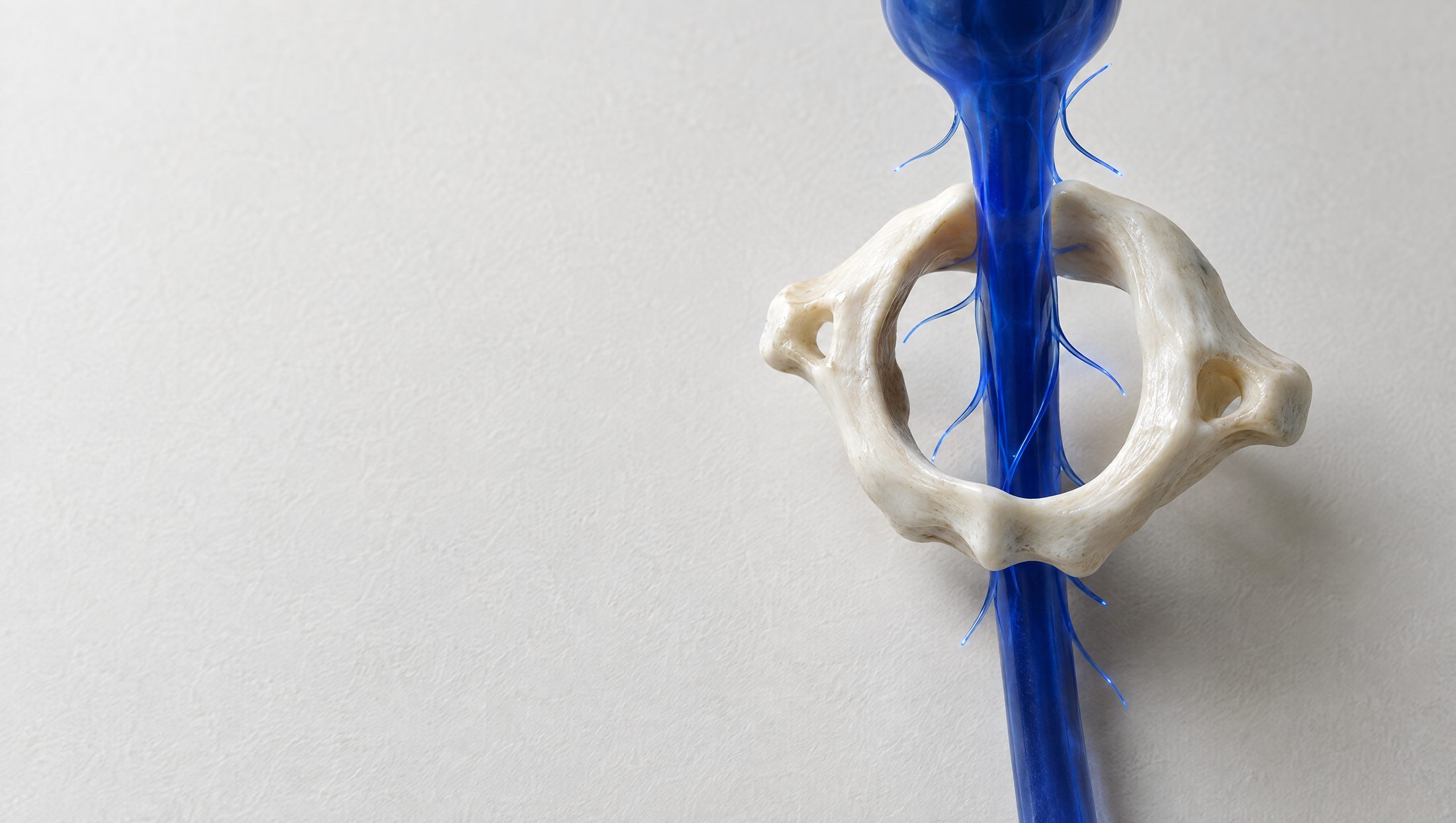
Ligaments are the strong bands that hold the bones of your neck together. A sudden force, such as whiplash in a car accident, a fall or a blow to the head, can stretch them. A stretched ligament may hold well enough when you stand still and let a bone slide too far when you move. This is called ligament laxity, or instability.
On a still X-ray the bones can look lined up. On a motion study, the extra glide can be seen. DMX shows what the bones do. What that means for you is something Dr. Lazar or someone personally trained by him will go over with you, together with your history and exam.
who it's for
When a still picture hasn't told the whole story.
A DMX study may be worth asking about if any of these sound like you. Whether it makes sense is decided with you, never assumed.
After a car accident
Whiplash puts a sudden force through the neck.
After a concussion
A blow hard enough to cause a concussion also jolts the neck.
After a fall or sports injury
A hard landing or a hit can jolt the neck, too.
Symptoms that change when you move
Turning, looking up or looking down brings things on or makes them worse.
Still images came back normal
Earlier X-rays or scans were taken holding still, and you still have questions.
Your doctor asked for one
Another provider would like to see how your neck moves.
what to expect
A short visit, and you stay in control of the movement.
For a neck (cervical) study, you are seated comfortably at the imaging unit. A low back (lumbar) study is done standing. We guide you through a few simple movements: forward, back, and side to side. You move only as far as is comfortable for you. Nothing is pushed or pulled.
Afterward, Dr. Lazar or someone personally trained by him will go over your images with you. If we can help, we'll tell you. If we can't, we'll help you find someone who can.

- A few minutesof imaging
- About 30 minutesfor the whole visit, with check-in
- Bring your completed DMX patient form, a photo ID, and your auto claim details if this is about a car accident.
- Wear a top without metal. Earrings, necklaces, hair clips and glasses come off for the study.
- If you are or may be pregnant, tell us before your visit. X-ray studies are generally not done during pregnancy.
for patients
How to get your DMX study.
- Request a DMX appointment online, or call 734.274.5107. A doctor's referral is welcome, and you can also ask on your own.
- Fill in the DMX patient form before you come, online or on paper.
- Come in for your study. Visits are by appointment only.
- Go over your images with Dr. Lazar or someone personally trained by him. If a doctor referred you, the findings go to them too, with your permission.
The DMX study is $1,200.
If the study is related to an auto accident and your auto policy has medical payments (MedPay) coverage, bring your claim information and we'll go over it with you.
The DMX patient form. Your information, a short neck and back questionnaire with a body chart, and your consent for the study.


for referring doctors
Send us a patient for a motion study.
When a patient's neck history includes whiplash, a concussion or a fall, and still imaging hasn't answered your question, a DMX study shows how the cervical segments move through flexion, extension and lateral bending.
How to refer
- Call 734.274.5107, or use our provider referral page and note that the referral is for a DMX study.
- Include the patient's name and contact details and your question for the study. We contact the patient to schedule and send them the DMX patient form.
What you receive
- A written findings report on the motion study: the views taken and how the cervical segments moved, including any excess translation or angulation seen.
- The motion study images, on request.
Sent to your office securely, with the patient's permission.
questions
DMX questions, answered plainly.
Don't see yours? Call 734.274.5107 or email hello@lazaruppercervical.com.
Is DMX the same as a regular X-ray?
Is there radiation?
Do I sit or stand?
Does it hurt?
How long does it take?
Do I need a referral?
What does it cost? Will insurance pay?
What if I'm pregnant?
Who sees my images?
I'm already coming in for upper cervical care. Is this the same?

request a DMX appointment
See how your neck moves.
Request a DMX appointment online, or call us. Someone from our team will call you back to schedule.
Request a DMX appointment → Call 734.274.5107
203 S. Zeeb Rd, Suite 106, Ann Arbor. Mon, Wed, Thu 9a–12p and 2p–6p, Fri 9a–12p. Tuesday, Friday afternoon and the weekend by appointment only.
DMX is a diagnostic imaging study. This page is general information and isn't a substitute for an exam.