Heart rate variability: what atlas research has looked at

You feel wired and tired at the same time. Your heart races for no reason, then you crash. The cardiac tests came back normal.

Where we measure this: Dysautonomia and POTS. All the conditions we see

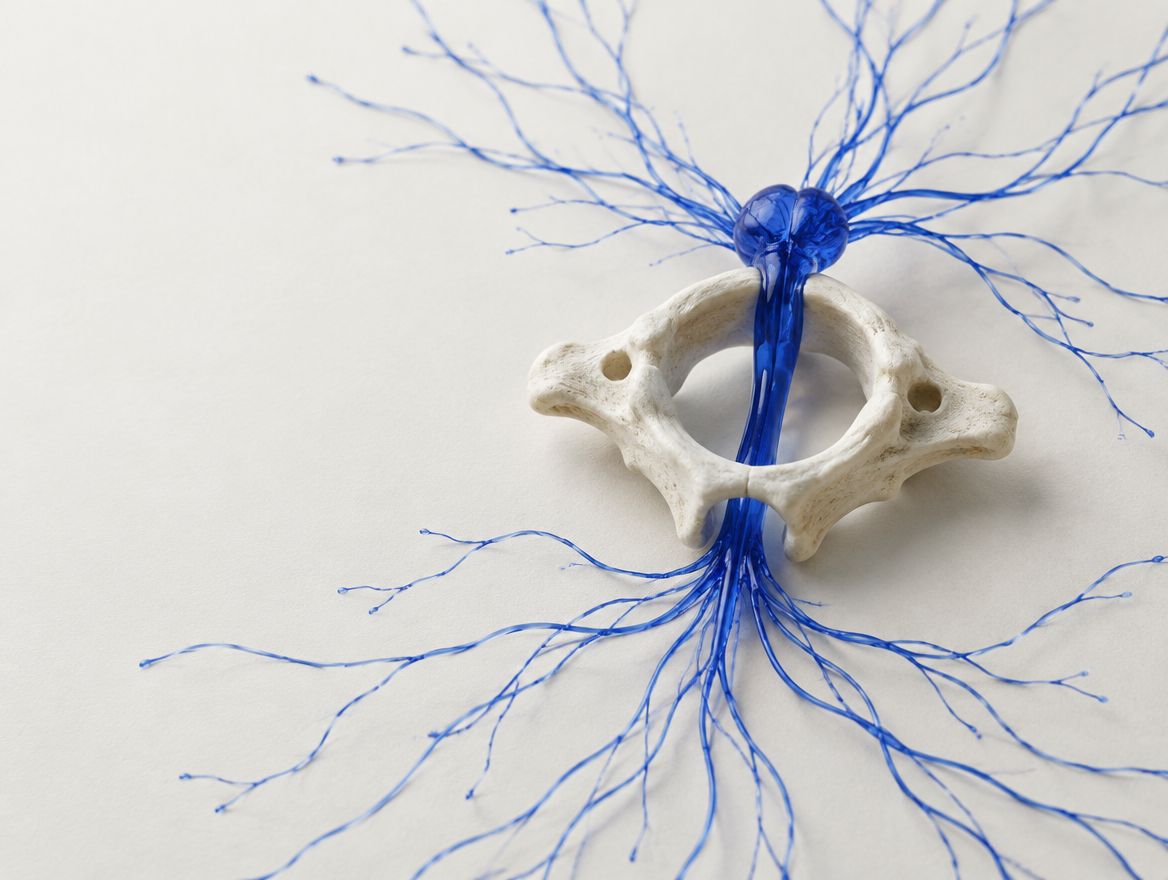
Illustration: the top vertebra of the neck, with fine blue nerve branches spreading out from it

Heart rate variability (HRV) is the small, healthy variation between heartbeats, and it is one of the clearest windows into the autonomic nervous system, the part that runs heart rate, digestion and the switch between fight-or-flight and rest-and-digest. It is also one of the readings we take before any correction. Two controlled studies have measured HRV after care at the atlas, and they don't agree. A case report followed HRV over two months of orthogonal care.

3 studies on this page

  • Designs: Randomized controlled trial, randomized crossover trial, case report
  • Published: 2015 to 2025

Where these studies sit, by design and year

3 studies, published 2015 to 2025. Strongest design: controlled trial.

the studies

What each study looked at

Strongest study design first. The dots show the design, from a single case (one dot) to a controlled trial (four). How to read this library

Randomized controlled trial2025Instrument impulse at C1

Heart rate variability after one instrument impulse at the atlas, compared with a placebo

Who and how many
64 adults aged 18 to 60 (average age 32) with short- or long-term muscle and joint pain.
What was measured
Heart rate variability, recorded with a chest-strap monitor before and after a single instrument-delivered impulse to the atlas (C1), or a placebo.
What was found
Some readings shifted within each group, but there were no significant differences between the real and placebo groups.
Limits
One visit and immediate readings only. The authors say outside factors they did not control may have shaped the results. We include it because a careful study that finds no difference is part of the honest picture.

Read the abstract on PubMed → Source 1

Randomized crossover trial2015General chiropractic, at C1 and C2

Top of the neck versus base of the neck: heart rate variability in 20 people

Who and how many
10 healthy volunteers and 10 people with recent neck pain, all with normal blood pressure.
What was measured
Heart rate variability, blood pressure, heart rate and pain scores after chiropractic care aimed at the top of the neck (C1 and C2) and, on another occasion, at the base of the neck (C6 and C7).
What was found
In the volunteers, care at the top of the neck was followed by a shift toward the rest-and-digest (parasympathetic) side and a small drop in systolic pressure, and care at the base of the neck by a shift toward the fight-or-flight (sympathetic) side. In the neck pain group, both were followed by a parasympathetic shift and lower pain scores.
Limits
Twenty people and short-term readings, described by the authors as preliminary. The care was a general chiropractic approach aimed at the upper neck segments, not an orthogonal upper cervical technique.

Read the abstract on PubMed → Source 2

Case report2021Atlas OrthogonalNot indexed in PubMed

A 74-year-old woman with a low heart rate, fatigue and lightheadedness

Who and how many
One woman, 74, with four months of a low heart rate, fatigue and lightheadedness.
What was measured
Heart rate, symptoms, heart rate variability at the start and 30 days later, and X-rays before and after, over 8 weeks: 20 visits and 6 Atlas Orthogonal corrections.
What was found
She reported a better heart rate and less fatigue and dizziness after the third correction. Her HRV reading shifted from parasympathetic toward sympathetic tone at 30 days, and follow-up X-rays showed less upper neck misalignment.
Limits
One person and no comparison. A shift toward sympathetic tone fits her starting problem, a slow heart rate, but one case can't show cause.

Read the abstract on the journal's site → Source 3

before you draw conclusions

What this research does and doesn't tell you

The larger, newer trial found no difference from placebo. The smaller, earlier one found a shift toward rest-and-digest. Neither used an orthogonal upper cervical method, and both looked only at readings taken right after one visit. The Atlas Orthogonal case report followed one woman for two months. This is exactly why we measure your HRV instead of assuming anything about it.

Published research can't predict what will happen for any one person, including you. Studies report averages and single stories; your nervous system is your own. That is why The Lazar Method™ starts with measurement, not with a promise.

We measure first, so the answer is about you, not an average.

Before any correction we measure how your nervous system is regulating your body: heart rate variability, thermal and muscle tone scans, PostureIQ™, and digital X-ray of the upper neck. QSM3, the method used at our office, is a progression of NUCCA. Dr. Jonathan Lazar, D.C., or someone personally trained by him, will go over your scans and images with you.

If we can help, we'll tell you. If we can't, we'll help you find someone who can.

Talk it through on a 15-minute Clarity Call →

This page is educational and is not medical advice. Keep the doctors who know you in the loop.

citations

Sources

  1. de Souza Horsth T, de Araujo Barros I, de Souza RC, de Sá Ferreira A, de Almeida RS. 2025. Heart rate variability responses to instrument-assisted atlas (C1) chiropractic manipulation: A randomized placebo-controlled trial. J Bodyw Mov Ther 44:784-788. PubMed 40954661 · DOI 10.1016/j.jbmt.2025.06.027
  2. Win NN, Jorgensen AMS, Chen YS, Haneline MT. 2015. Effects of Upper and Lower Cervical Spinal Manipulative Therapy on Blood Pressure and Heart Rate Variability in Volunteers and Patients With Neck Pain: A Randomized Controlled, Cross-Over, Preliminary Study. J Chiropr Med 14(1):1-9. PubMed 26693212 · DOI 10.1016/j.jcm.2014.12.005 · free full text
  3. Osborne C, Rauch B. 2021. Improvement in Heart Rate, Heart Rate Variability & Reduction in Dysautonomia in a 74-Year-Old Female Undergoing Upper Cervical Chiropractic Care: A Case Report & Review of the Literature Journal of Upper Cervical Chiropractic Research January 27, 2021:1-9. Not indexed in PubMed. Article page on vertebralsubluxationresearch.com

Titles are quoted exactly as published. Sources checked 2026-11-03.

tried everything

When nothing else has worked, start with clarity.

In about 4 minutes, you'll see whether your symptoms point to nervous system dysfunction, and exactly what to do next. Free. Your answers stay private. No spam, ever.

Prefer to talk first?

or call 734.274.5107 · ready to come in? Book your complimentary consultation

Screening adapted from the autonomic dysfunction screening developed by Bruce Bell, MD.

A member of our team will reach out within one business day.